O ponto cego do S&OP
A maioria das empresas não falha no S&OP. Falha na transição do S&OP para a execução.
O S&OP cumpre bem o papel para o qual foi criado: alinhar comercial, operações, finanças e suprimentos em torno de um plano comum. Esse alinhamento é necessário, mas não é suficiente.
O problema começa quando o plano precisa sair da sala de reunião e chegar no PCP. É nesse ponto que aparecem as restrições reais da operação, as exceções de capacidade e as decisões que o consenso não previu. E é nesse ponto que a maioria das plataformas de S&OP perde força.
O problema conceitual do S&OP
Na prática, muitos processos de S&OP funcionam mais como "Sales" do que como "Operations". Tudo começa com uma demanda irrestrita, construída a partir do que comercial e marketing entendem como oportunidade. Só depois essa demanda é empurrada para a operação, que precisa "acomodar" o que foi prometido.
Consenso não é o mesmo que viabilidade. Um número aprovado em comitê continua sendo apenas um número se não considerar capacidade real, lead time, setup e disponibilidade de insumos. A correção do plano acaba acontecendo depois, fora do processo formal de S&OP, normalmente em planilhas paralelas.
Planejar com demanda irrestrita é confortável, porque ignora o problema.
S&OP deixou de ser categoria — e isso diz muito
Durante muitos anos, o S&OP foi tratado como uma categoria própria de software. Até 2019, o próprio Gartner publicava um Magic Quadrant específico para soluções de S&OP, avaliando plataformas focadas em alinhamento de demanda, consenso e governança executiva.
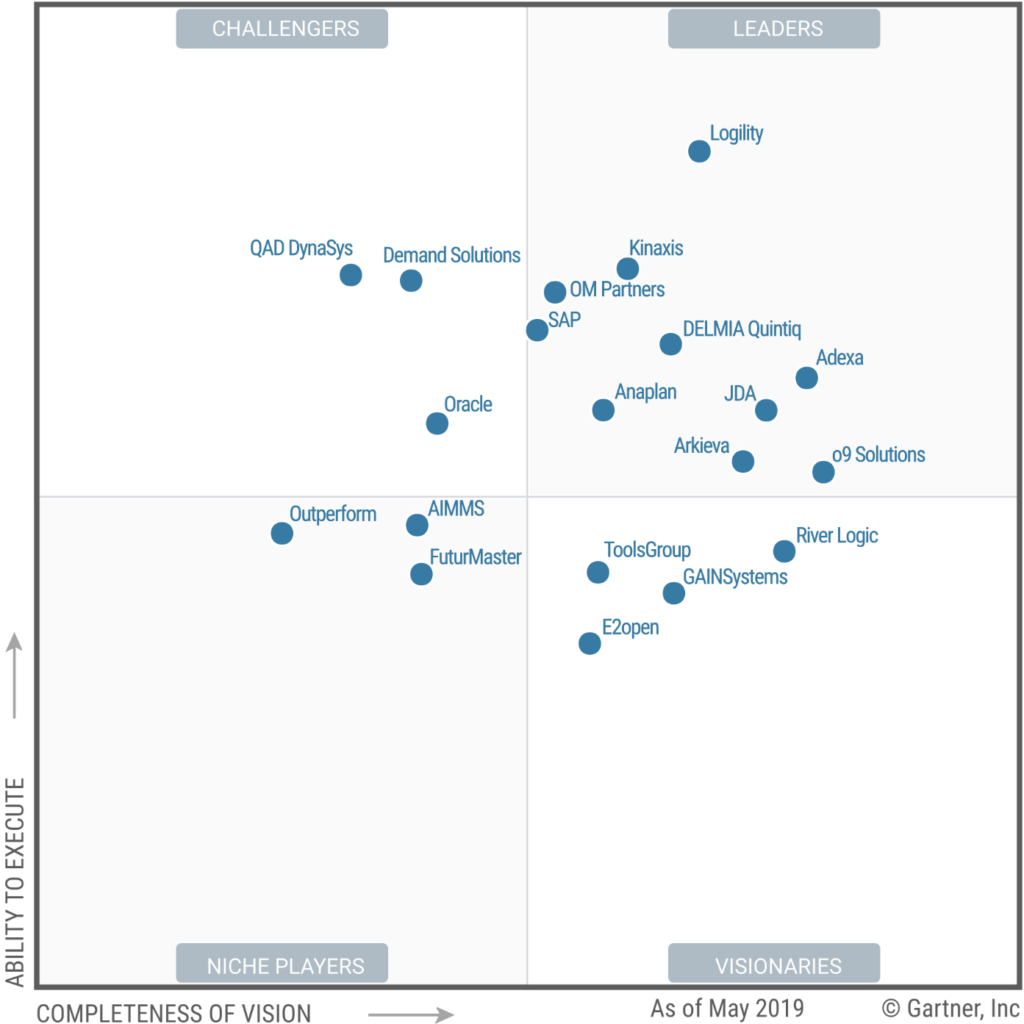
Última edição publicada antes da consolidação da categoria em Supply Chain Planning.
Esse posicionamento mudou.
A partir dos anos seguintes, o Gartner deixou de tratar S&OP como uma categoria independente e passou a consolidar a análise dentro de Supply Chain Planning.
Isso não foi apenas uma mudança de nomenclatura. Foi um reconhecimento claro de que S&OP é parte do processo, não o processo completo.
Na prática, isso reforça algo que muitas empresas já sentem no dia a dia: o S&OP organiza o alinhamento entre áreas, mas não resolve, sozinho, o problema de planejamento. Principalmente quando o plano precisa considerar restrições reais de capacidade, refletir decisões operacionais e se traduzir em execução.
Outro ponto importante: S&OP é, por definição, um processo, não necessariamente uma ferramenta. Quando ele é tratado apenas como um software isolado, tende a reforçar exatamente a limitação que o próprio mercado passou a reconhecer: o distanciamento entre o plano consolidado e a realidade operacional.
É por isso que o movimento natural do mercado foi ampliar o escopo. De S&OP para IBP. E de IBP para Supply Chain Planning end-to-end.
Até o próprio Gartner deixou de tratar S&OP como uma categoria isolada.
A necessidade de modernização do S&OP
O processo de Sales and Operations Planning (S&OP), concebido na década de 1980 por Oliver Wight, foi um marco para a integração funcional. Sua estrutura original, no entanto, reflete as limitações tecnológicas da época: ciclos mensais, processamento em lote e foco em volumes agregados.
Por que modernizar?
A integração não é mais uma etapa
Antigamente, integrar dados era uma tarefa hercúlea que justificava uma etapa formal do processo. Em uma arquitetura de dados moderna, a integração precisa ser nativa e trivial. O foco do ciclo deve estar na decisão, não na reconciliação.
O perigo da agregação cega
Planejar apenas por famílias de produtos em níveis agregados é útil para discussões estratégicas de longo prazo, mas falha na execução. A modernização exige que o plano seja desagregado instantaneamente para validar a viabilidade física no nível de SKU: capacidade, materiais e estoque.
Simulação com propagação total
Decisões tomadas no S&OP sem visibilidade do impacto na matéria-prima ou na capacidade finita são decisões cegas. O S&OP moderno opera como um Digital Supply Chain Twin: qualquer mudança no topo da pirâmide (demanda) recalcula automaticamente toda a base (suprimentos e produção).
Modernizar o S&OP não é descartar Oliver Wight. É reconhecer que o problema mudou: hoje a maturidade está em desagregar, propagar e decidir em ciclo curto, não em integrar planilhas uma vez por mês.
Onde o modelo quebra na prática
O fluxo típico das empresas que rodam S&OP em ferramentas tradicionais costuma seguir um caminho parecido:
Esse vai-e-vem gera consequências previsíveis: quebra de consistência entre sistemas, perda de rastreabilidade, lentidão na tomada de decisão e cenários que não se propagam para as camadas seguintes do plano.
Se o cenário não recalcula automaticamente todas as camadas, não é simulação. É ajuste manual.
Quando a simulação depende de exportar dados, ajustar planilhas e reimportar resultados, o ciclo de decisão se mede em dias ou semanas. A operação, no entanto, se mede em horas.
O gap entre consenso e execução
O consenso acontece na diretoria. O problema aparece na operação. Essa frase resume bem a distância entre o que o S&OP entrega e o que a fábrica precisa.
O S&OP é eficiente em resolver divergências entre áreas, mas não é desenhado para resolver restrições físicas. Capacidade finita, tempos de setup, lead time de fornecedores, prioridade entre ordens e disponibilidade de recursos continuam fora do modelo. São tratados depois, em outra ferramenta, por outra equipe, com outro horizonte de planejamento.
O resultado é um plano de S&OP que parece sólido no nível agregado, mas que se desfaz quando precisa ser desdobrado em ordens executáveis.
Como os principais players de S&OP atuam
Cada plataforma do mercado de S&OP traz uma abordagem diferente. Vale entender onde cada uma é forte e onde encontra seus limites.
Plannera

Forte em consultoria e metodologia de S&OP. Reconhecida no mercado brasileiro pela governança e pela estruturação de processo.
Pyplan

Abordagem inovadora com uso de IA. Plataforma flexível e customizável, boa para modelagem analítica e simulação.
Colplan (VE3)

Foco em S&OP e IBP estruturado, com boa integração com ERP e abordagem alinhada ao modelo tradicional de planejamento.
A limitação reside na desconexão entre o consenso estratégico e a viabilidade da execução
O S&OP cumpre bem o papel de alinhar áreas e dar visibilidade financeira ao plano. A limitação aparece quando a organização espera dele algo que o conceito original nunca foi desenhado para entregar: garantir a viabilidade física da execução.
O S&OP foi concebido para alinhamento agregado. Resolver operação, gerar plano executável e lidar com capacidade finita real, no nível em que o PCP precisa decidir, exigem uma camada distinta: o Supply Chain Planning.
Organizar o processo não é o mesmo que garantir a execução.
Onde o Supply Chain Planning muda o jogo
O Supply Chain Planning moderno parte de uma premissa diferente. Não é planejamento agregado complementado por execução. É planejamento integrado, com restrições reais consideradas desde o início.
Demanda, supply e capacidade passam a ser resolvidos juntos, na mesma plataforma e no mesmo modelo. O plano já nasce viável, sem depender de uma segunda rodada de ajustes manuais para se tornar executável.
Camadas integradas
Demanda, supply e capacidade no mesmo modelo.
Cenários propagados
Cada simulação recalcula todas as camadas automaticamente.
Plano executável
Sai da plataforma pronto para virar ordem.
Como o NPLAN aborda isso
O NPLAN foi construído como uma plataforma end-to-end de Supply Chain Planning. Não como um sistema de S&OP que tenta se aproximar da operação, e sim como um planejamento que parte da operação para garantir consistência em toda a cadeia.
Capacidade finita real, integração entre demanda, supply e execução, e cenários que se propagam automaticamente entre as camadas fazem parte do núcleo da plataforma. Não são módulos auxiliares.
Na prática, isso significa que o plano não precisa sair do sistema para fechar. Não há quebra entre o que foi planejado e o que será executado, porque ambos vivem dentro do mesmo modelo.
Conclusão
S&OP continuará sendo importante para alinhar áreas e dar previsibilidade financeira. O ponto de atenção é outro: esperar dele uma resposta que ele não foi projetado para dar.
O problema nunca foi falta de S&OP. O problema é depender dele para algo que ele não resolve.
Antes de escolher uma ferramenta, vale uma pergunta simples:
Você está alinhando números ou garantindo que o plano funcione na operação?
Veja como cenários completos de SCP recalculam toda a cadeia
Se o S&OP não consegue propagar uma simulação até a operação, este é o próximo passo lógico: entenda como funciona a Simulação Completa de Cenários no NPLAN, com restrições reais de capacidade, BOM e estoque sendo recalculadas em segundos.
Leia mais em nplan.digital/articles/scenario-simulation