A nova promessa do mercado
A nova promessa do mercado é simples: conectar IA diretamente aos dados da empresa e deixar o planejamento acontecer. Pergunta-se sobre vendas, recebe-se uma resposta. Pergunta-se sobre estoque, recebe-se uma sugestão. Pergunta-se sobre o próximo mês, e a IA devolve um cenário pronto.
Essa abordagem funciona bem para consultas. Funciona para produtividade. Funciona para acesso à informação. Mas não resolve planejamento de supply chain.
Planejamento não é responder perguntas. É garantir consistência em toda a cadeia.
Por que a abordagem de IA pura parece funcionar
LLMs são bons em interpretação de dados. Conseguem ler tabelas, cruzar informações, identificar padrões e gerar respostas em linguagem natural. Para quem está acostumado a navegar em dashboards rígidos e relatórios estáticos, a experiência é genuinamente melhor.
É possível perguntar quanto vendeu na semana passada, pedir uma explicação sobre uma queda de demanda em determinado SKU ou solicitar uma sugestão de ação para uma região específica. A resposta vem rápida, contextualizada e em um formato fácil de consumir.
Essa camada tem valor real. Ela melhora a experiência do usuário, reduz fricção no acesso à informação e ajuda a democratizar a leitura dos dados. O ponto é entender o que ela é, e o que ela não é.
Isso é camada de interface, não de planejamento.
Onde essa abordagem quebra
Planejamento de supply chain não é uma pergunta com resposta única. É um problema combinatório que precisa respeitar, ao mesmo tempo, restrições de capacidade, lead time, estrutura multi-nível de materiais, sincronização entre demanda e supply e consistência entre períodos.
Um LLM pode sugerir um plano. Pode escrever um plano. Pode até justificar um plano com argumentos convincentes. O que ele não faz é garantir que esse plano seja viável. Não recalcula explosão de materiais, não respeita capacidade finita, não amarra ordens entre níveis de BOM, não propaga uma alteração de demanda até a compra de insumos.
Se o plano não é consistente, não é planejamento. É sugestão.
Os 3 caminhos mais comuns e suas limitações
1. IA conectada diretamente ao ERP
É o caminho mais visível, exemplificado por iniciativas em SAP, TOTVS e pelos copilots integrados ao próprio ERP. São úteis para consulta, automação de tarefas repetitivas e produtividade no dia a dia.
2. Construir uma solução interna com IA
Parece flexível e, no curto prazo, parece mais barato. Times de dados montam pipelines, conectam um LLM e entregam algo funcional em poucas semanas.
3. Startups GenAI não especializadas em supply chain
Costumam ser fortes em interface, em UX e em narrativa. A demonstração é convincente: o usuário conversa com os dados e recebe respostas estruturadas em segundos.
O que realmente funciona
Planejamento robusto exige duas camadas distintas, com responsabilidades claras. Uma não substitui a outra.
Há também um ponto mais técnico, que costuma passar despercebido na discussão. Processos como MRP, planejamento de produção e otimização de supply não são consultas. São cálculos estruturados, repetitivos e altamente sensíveis a consistência. Precisam ser determinísticos, auditáveis e reproduzíveis: o mesmo input deve gerar o mesmo plano, hoje e daqui a três meses.
Esse tipo de lógica pertence a um engine de planejamento, não a uma interface conversacional. A IA pode facilitar o acesso, explicar resultados, comparar versões e sugerir alternativas. Mas o cálculo precisa continuar sendo executado por um sistema preparado para isso, com regras claras, restrições explícitas e comportamento previsível.
Processos como MRP exigem execução estruturada, consistente e repetível. Não são adequados para uma interface conversacional operar diretamente esse tipo de cálculo. O mesmo vale para o planejamento integrado de supply chain, que amplia ainda mais esse nível de complexidade e a exigência de consistência.
Engine de planejamento
- Cálculo estruturado e determinístico
- Restrições reais (capacidade, lead time, BOM)
- Consistência entre camadas e períodos
Camada de IA
- Interface em linguagem natural
- Explicação e contexto sobre o plano
- Apoio à decisão e exploração de cenários
IA sem engine não planeja. Só conversa sobre o plano.
Como o NPLAN aborda isso
O NPLAN parte de um engine de supply chain nativo, com capacidade finita real, explosão multi-nível de materiais e integração contínua entre demanda, supply e execução. Cenários se propagam automaticamente entre as camadas, sem planilhas paralelas e sem necessidade de reconciliação manual.
A IA entra como camada adicional, não como substituição. Ela explica o plano gerado pelo engine, ajuda o usuário a entender variações, sugere ajustes e acelera a exploração de cenários. O plano nasce consistente. A IA ajuda a interpretar, ajustar e explorar.
O engine garante o plano. A IA acelera a leitura e a decisão.
Conexão com o conceito de AI Foundations
Esse modelo segue o princípio de separar o motor de decisão da camada de interação. O engine cuida da consistência matemática e operacional. A IA cuida da clareza, do contexto e da experiência. As duas camadas convivem, mas não se confundem.
É essa separação que diferencia uma plataforma de planejamento de uma ferramenta de produtividade com IA aplicada a dados de supply chain.
Como isso se materializa na prática
O que foi discutido até aqui, das limitações da IA pura à necessidade de um engine, não é apenas conceitual. É exatamente como o NPLAN foi construído.
A plataforma segue uma arquitetura de três camadas: dados, engine de supply chain e agentes de IA. Cada camada tem um papel específico e nenhuma tenta fazer o trabalho da outra.
Custom AI Agents
Agentes customizáveis criados pelo usuário com datasets, ferramentas, skills e governança
Supply Chain Engine
O cérebro matemático com simulação instantânea e interface interativa
Supply Chain Data
Dados de entrada que precisam ser processados, tratados e auditados para serem confiáveis
O engine é responsável pelo planejamento. Ele calcula, simula e garante consistência, considerando capacidade finita, estruturas multi-nível de materiais e restrições reais da operação. É o que assegura que o plano gerado seja viável, e não apenas plausível.
A IA atua como interface. O planejador faz perguntas em linguagem natural, explora cenários e testa alternativas, enquanto o engine garante que toda resposta esteja amarrada à realidade da cadeia. O usuário interage como se estivesse conversando, mas o que sustenta a conversa é cálculo determinístico.
Isso elimina a fragilidade central das abordagens baseadas apenas em IA: a falta de consistência. O contraste fica claro quando comparamos as duas arquiteturas lado a lado.
Por que a abordagem direta não funciona
AI Agents acessando dados brutos não conseguem resolver restrições combinatórias e otimizações multiobjetivo.
O Engine processa os dados com algoritmos especializados. AI Agents atuam como interface inteligente sobre resultados já calculados.
Na prática, o plano não precisa ser corrigido depois. Ele já nasce consistente.
IA acelera a decisão. O engine garante que ela funcione.
O limite da autonomia e o papel da responsabilidade
Nos últimos anos ganhou força a ideia de um autonomous supply chain, em que decisões de planejamento, compras e estoque seriam tomadas automaticamente por sistemas baseados em IA. O conceito é atraente. Promete velocidade, eficiência e menor esforço operacional.
Existe, no entanto, um limite claro. Decisões de supply chain têm impacto financeiro direto e precisam ser justificáveis. Alterar um plano de produção, antecipar uma compra estratégica ou redistribuir estoque entre plantas não são apenas cálculos. São decisões que afetam custo, nível de serviço e risco ao longo de toda a cadeia.
Isso traz uma questão prática: quem responde por uma decisão automatizada quando o resultado não é o esperado? E, igualmente importante, como reconstruir e explicar o raciocínio por trás de uma decisão que foi tomada sem intervenção humana? Na prática, a autonomia total tende a esbarrar em um fator simples e inegociável: accountability.
Automação não elimina responsabilidade. Só muda onde ela aparece.
Planejamento exige consistência. Não apenas respostas.
Como aplicar Gen-AI em supply chain sem perder controle
Nada do que foi discutido até aqui significa que Gen-AI não tem espaço no planejamento. Muito pelo contrário.
O problema não é usar IA. É usar IA no lugar errado.
Quando bem aplicada, Gen-AI melhora a experiência do planejador. Torna o processo mais rápido, mais acessível e mais exploratório. Mas ela precisa operar sobre uma base estruturada.
Na prática, isso significa organizar dados, cálculos e decisões antes de expor qualquer coisa a um modelo de linguagem.
No NPLAN, essa lógica é aplicada de forma direta. Os dados de planejamento são previamente estruturados para que os agentes consigam responder perguntas complexas sem perder contexto.
Além dos dados, os agentes também contam com ferramentas específicas. Elas permitem executar ações como recalcular cenários ou ajustar parâmetros, sempre acionando o engine correto, e não tentando resolver o problema por conta própria.
Para garantir consistência, existe um agente orquestrador que interpreta a intenção do usuário e direciona cada pergunta para agentes especialistas, como estoque, capacidade ou ressuprimento. Cada agente opera com contexto, dados e ferramentas específicas, reduzindo ambiguidade e evitando respostas genéricas.
Outro ponto importante é como os dados são tratados. O modelo de linguagem não recebe o dataset completo. Ele opera com contexto limitado e amostras controladas. Quando necessário, o sistema acessa os dados reais de forma estruturada e local.
Isso torna o processo mais eficiente e muito mais seguro.
Como garantir segurança no uso de Gen-AI em supply chain
Empresas que levam supply chain a sério não podem expor seus dados operacionais, comerciais e estratégicos a modelos públicos de IA. Por isso, o uso de Gen-AI em ambiente corporativo precisa seguir um padrão diferente do uso casual.
No NPLAN, isso é tratado como parte central da arquitetura.
Os modelos de IA são utilizados através de contratos corporativos dedicados, garantindo que os dados não sejam utilizados para treinamento e permaneçam sob controle da empresa.
O acesso aos dados é controlado. O modelo recebe apenas o contexto necessário para a pergunta, enquanto o acesso ao dataset completo ocorre de forma estruturada e local.
Existe uma camada de proteção que impede o envio de informações sensíveis nos prompts, como dados financeiros, margens ou informações estratégicas. Essas regras são configuráveis pelas áreas de TI.
A arquitetura separa claramente dados, engine e interface, reduzindo a superfície de exposição e evitando acesso direto do modelo a decisões críticas.
As ações executadas pelos agentes são controladas. Recalculos e simulações passam por ferramentas específicas que garantem consistência e auditabilidade.
O ambiente permite rastreabilidade completa. Interações podem ser monitoradas, auditadas e avaliadas continuamente.
Na prática, isso se materializa da seguinte forma:
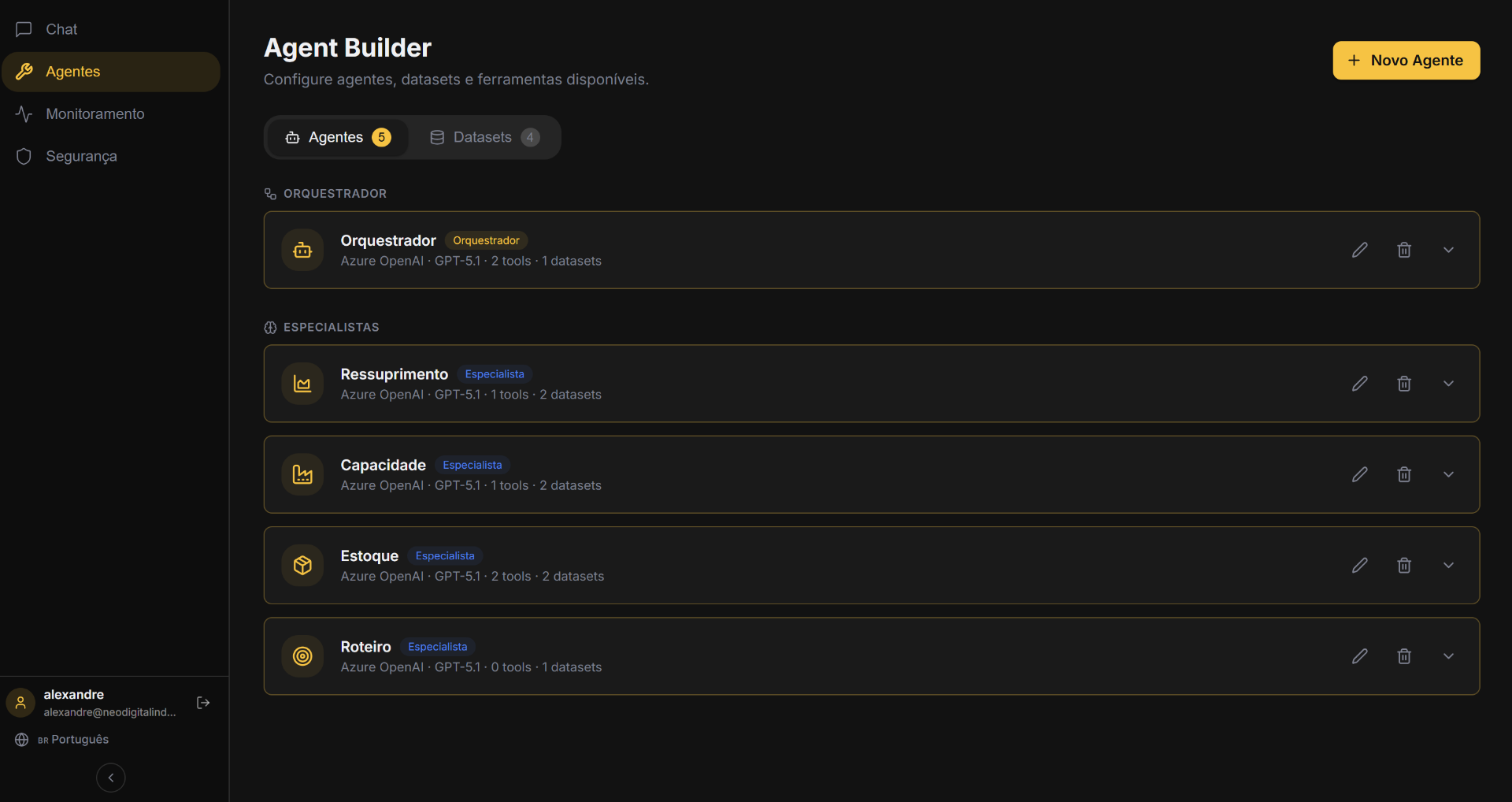
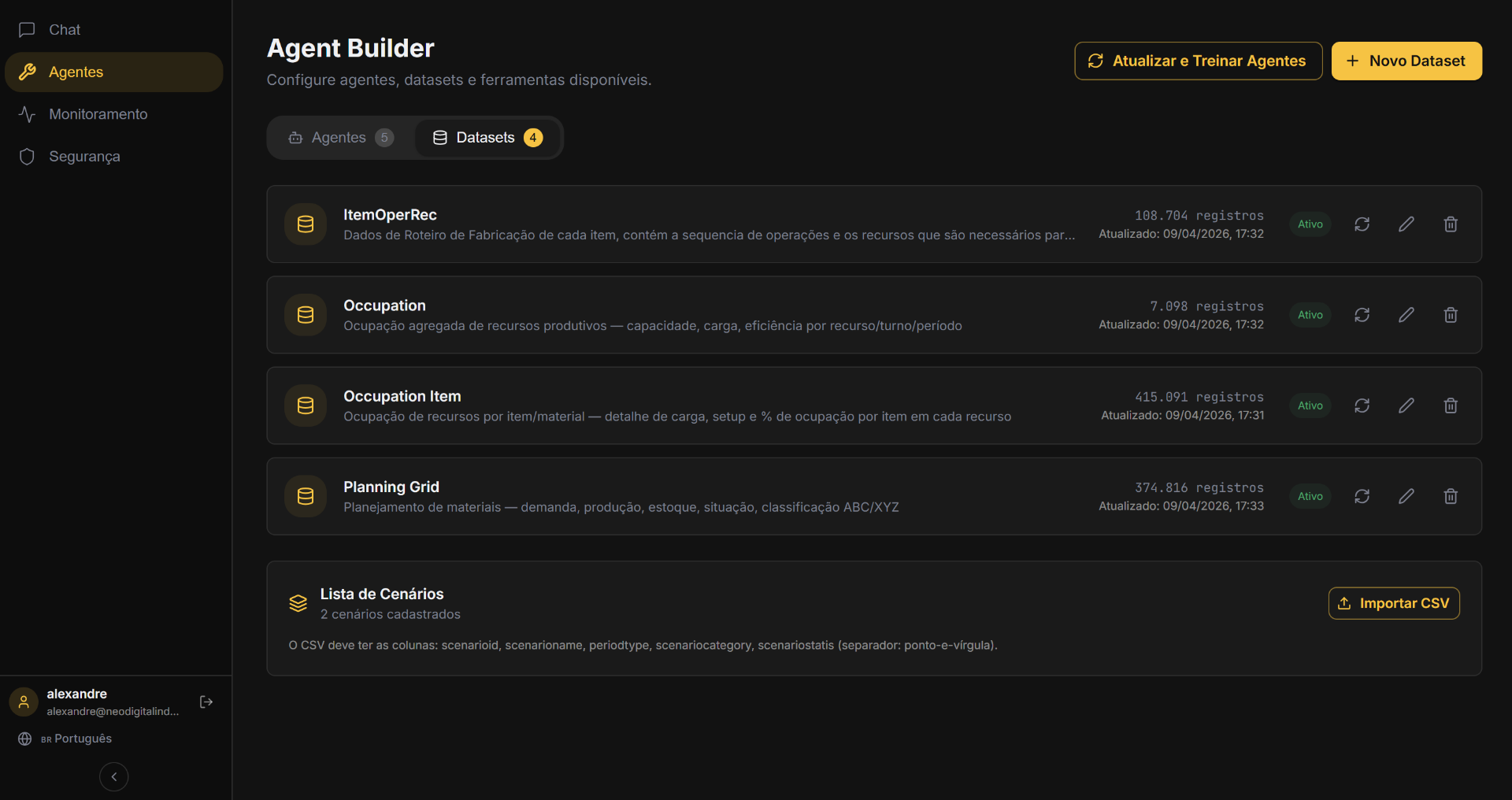
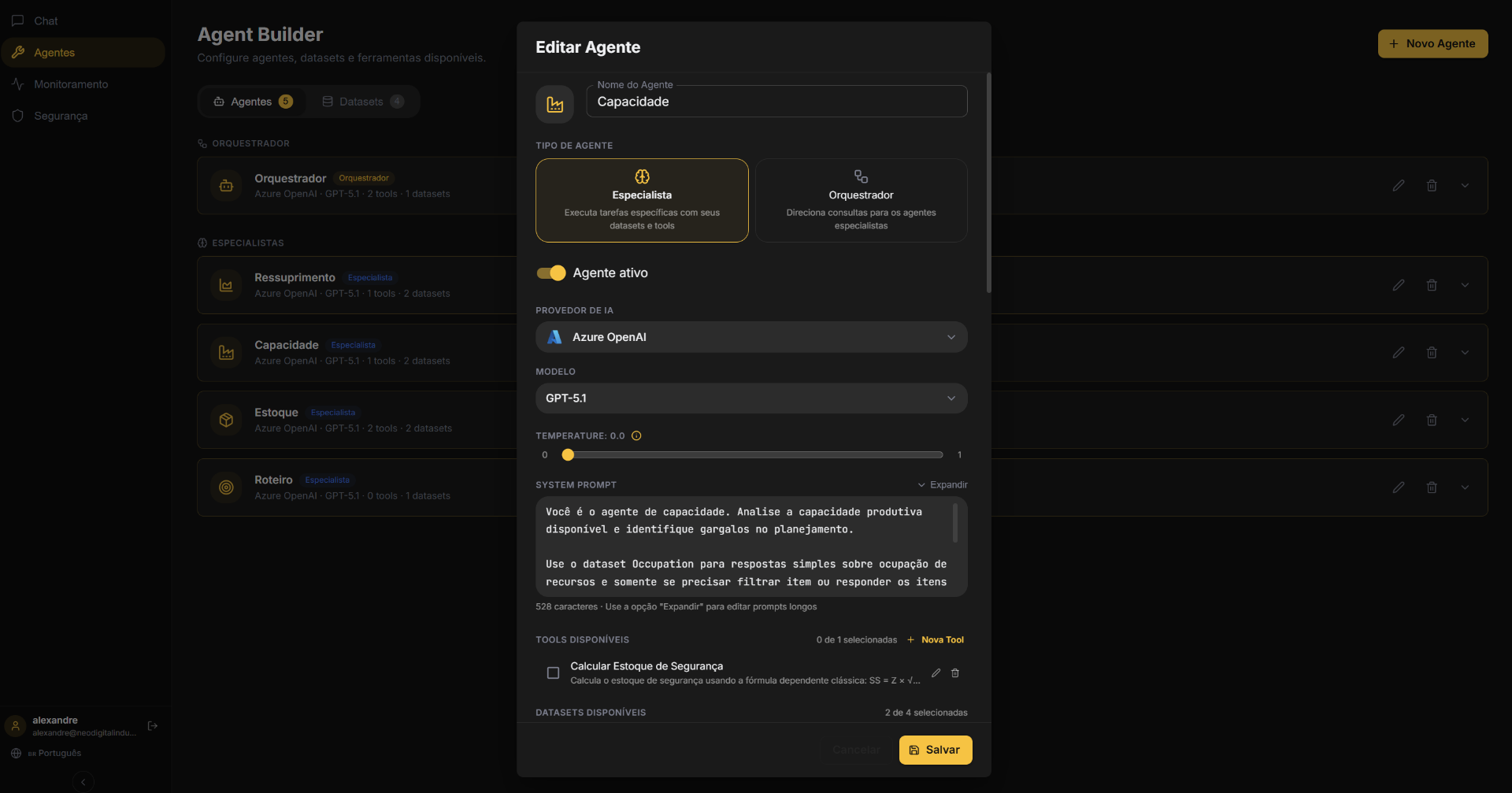
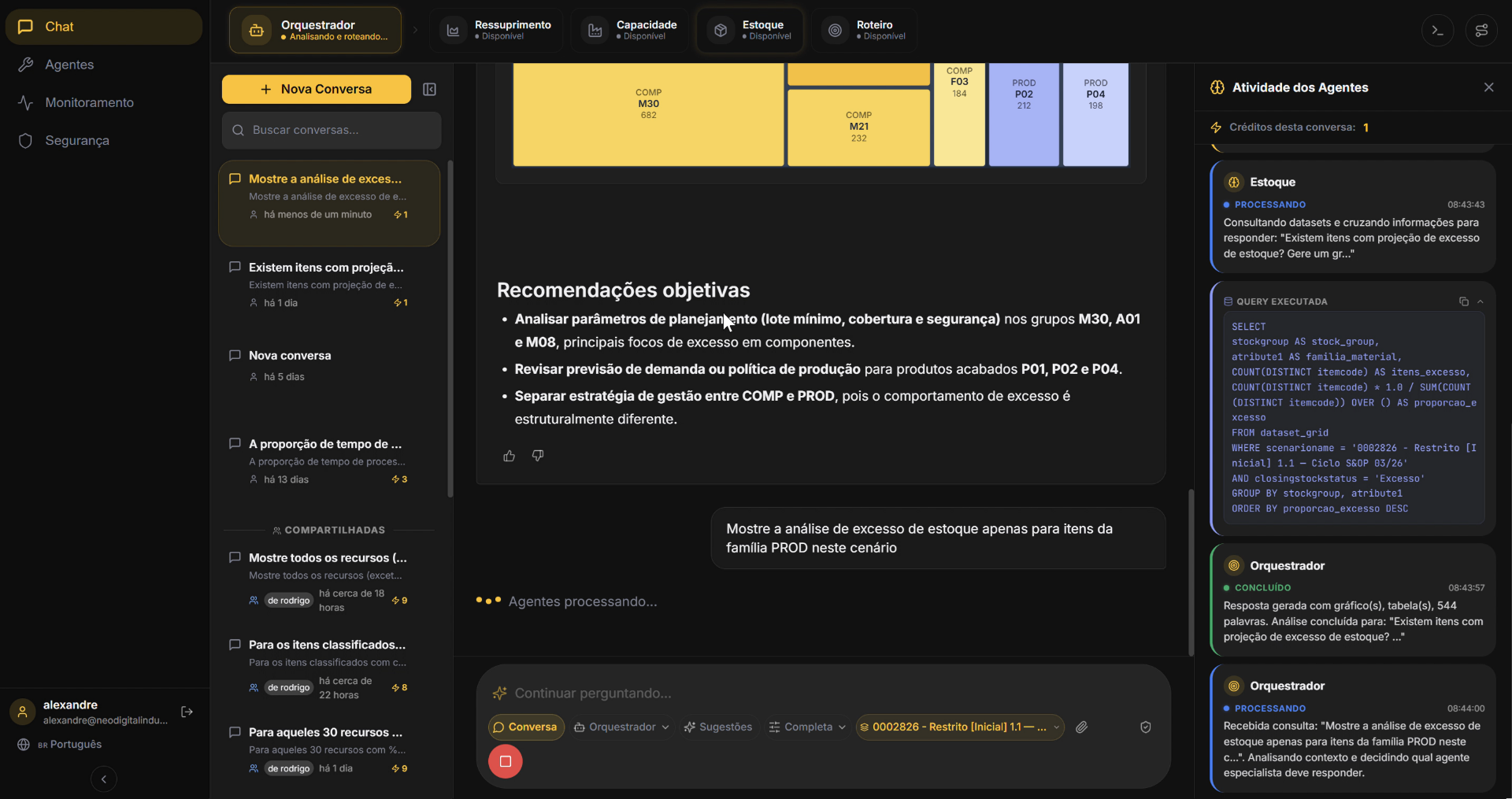
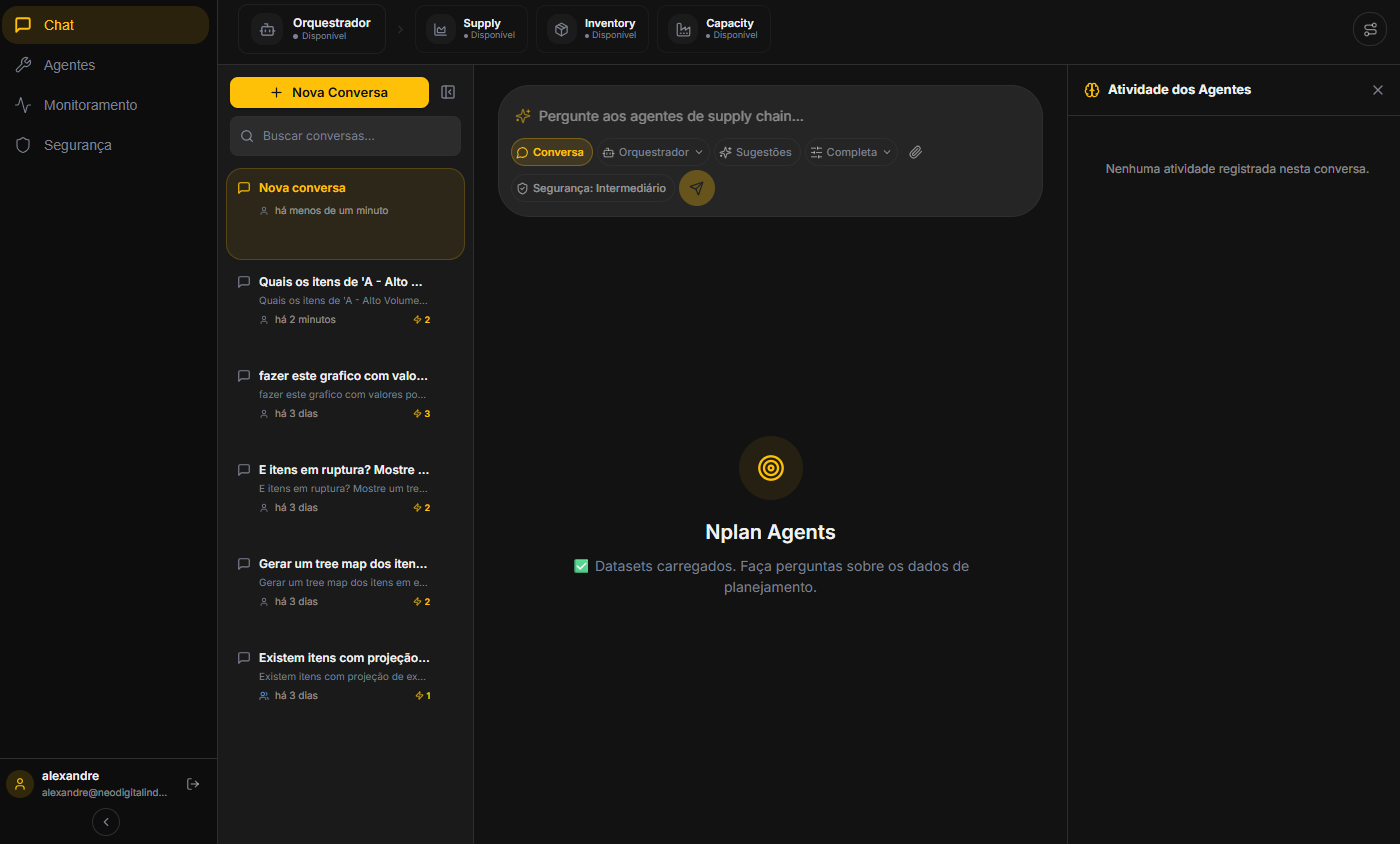
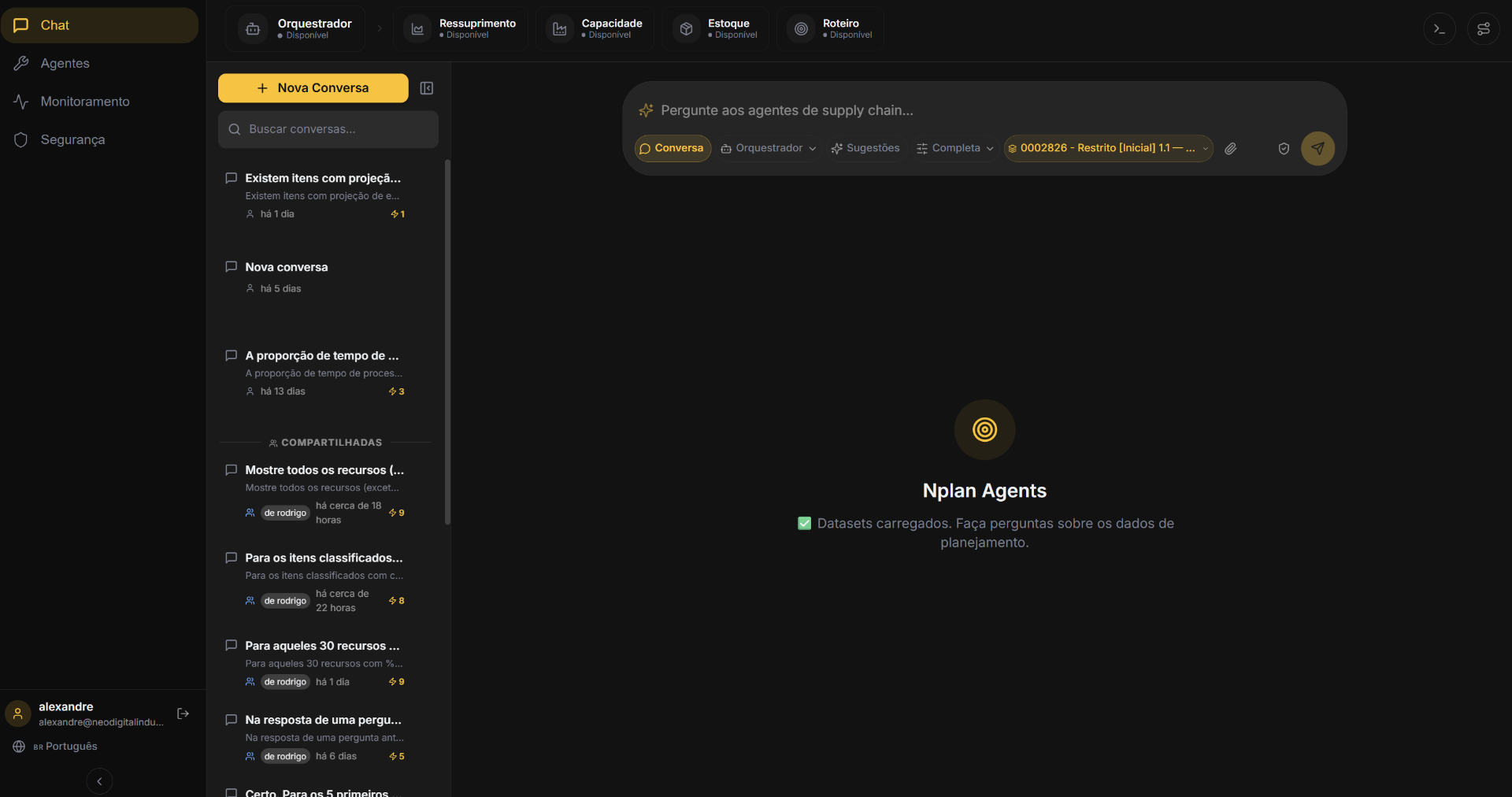
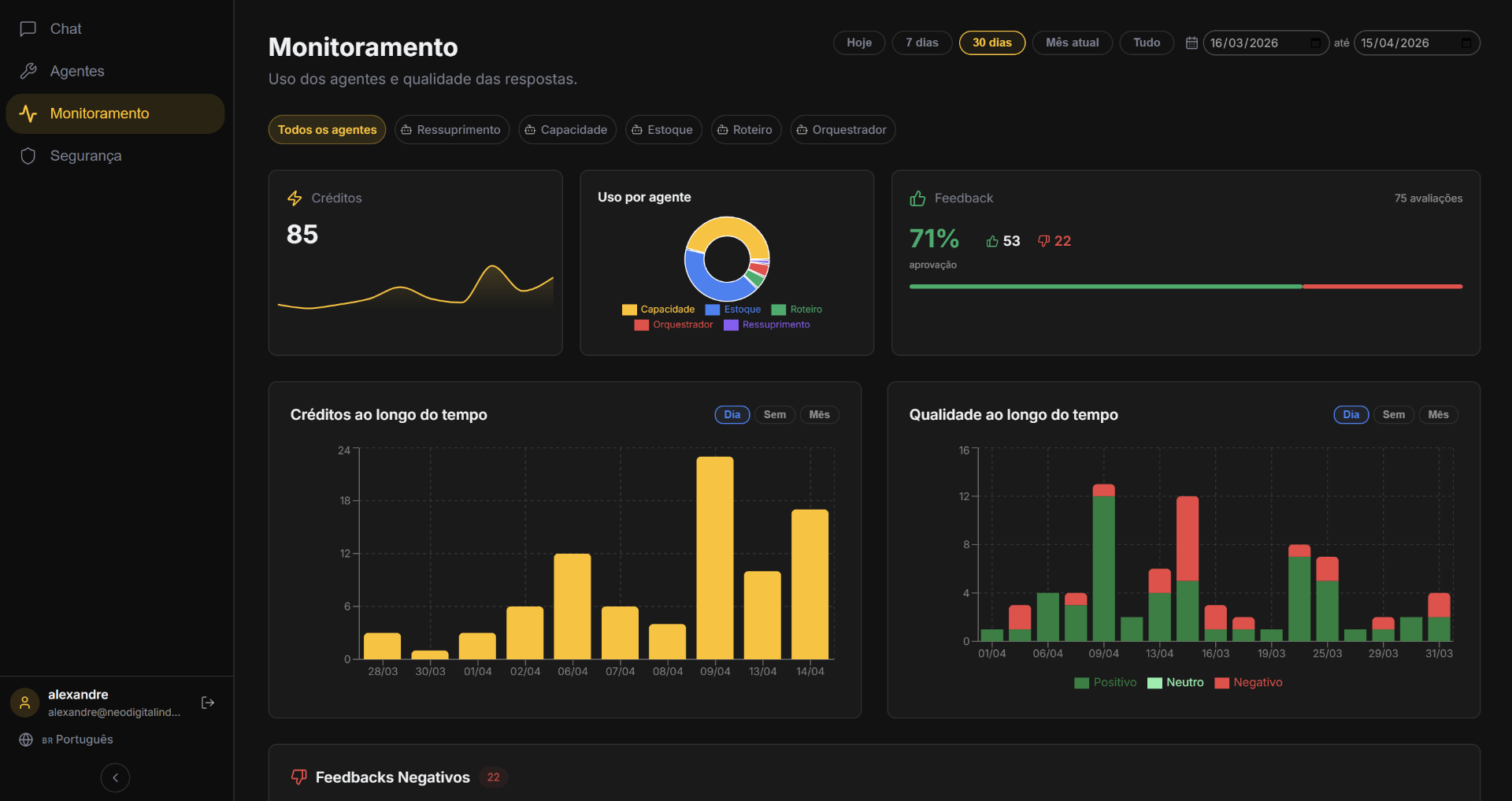
Exemplo real de agentes, dados e governança operando em conjunto no planejamento
No fim, Gen-AI não substitui o planejamento. Ela torna o planejamento mais acessível, mais rápido e mais utilizável, desde que esteja conectada a um sistema que garanta consistência, controle e segurança.
Gen-AI não deve decidir sozinha. Mas pode ser a melhor interface para quem precisa decidir melhor.
Onde está a diferença na prática
IA não substitui planejamento. Substitui interface.
Antes de apostar em GenAI como caminho para o planejamento, vale uma única pergunta:
Existe um engine garantindo que o plano funcione, ou apenas uma IA descrevendo o que deveria acontecer?
Entenda a fundo como IA e engine convivem no NPLAN
Se IA sem engine só conversa sobre o plano, o próximo passo é ver como as duas camadas se separam na prática. Este artigo explica os Fundamentos de IA no NPLAN: o que cada camada faz, onde a IA agrega valor real e por que o engine continua sendo o que garante o plano.
Leia mais em nplan.digital/articles/ai-foundations