Introdução
A Inteligência Artificial está redefinindo o planejamento de supply chain, permitindo que empresas prevejam, adaptem e otimizem suas operações com precisão sem precedentes.
Neste artigo, apresentamos a priorização proprietária da NPLAN para aplicações de IA em planejamento, desenvolvida com base em projetos reais e aprendizados em clientes. Utilizamos referências públicas como contexto de mercado (ex.: Gartner), mas o foco aqui é o caminho prático que priorizamos para gerar resultado.
Você verá o panorama atual de adoção, entenderá como priorizamos iniciativas considerando impacto e viabilidade, e descobrirá como o NPLAN pode transformar seu planejamento em uma vantagem competitiva através da IA.
Status de Adoção de IA
Panorama de maturidade — números inspirados em leituras públicas de mercado para referência educacional.
Demand Planning
em produção
Supply Planning
em produção
Nota: números inspirados em leituras públicas de mercado (ex.: Gartner) e organizados aqui para referência educacional.
Esses números mostram que ainda há poucas empresas utilizando aplicações práticas de IA em ambiente de produção, principalmente em supply chain. A tecnologia ainda está em fase inicial de adoção em operações reais.
No entanto, muitas empresas já estão explorando IA com projetos pilotos. Se a sua empresa não estiver fazendo nada nessa direção, pode ficar para trás enquanto concorrentes ganham vantagem competitiva testando e aprendendo com essas tecnologias.
IA com NPLAN
O NPLAN é uma plataforma SaaS de Supply Chain Planning que conecta dados, processos e equipes em um único ambiente, transformando o planejamento em uma vantagem competitiva. Por meio da combinação de Inteligência Artificial, otimização e automação, a plataforma entrega previsões mais precisas, decisões mais ágeis e execução alinhada aos objetivos estratégicos.
Desenvolvido para atender operações complexas, o NPLAN é flexível para se adaptar a diferentes ambientes tecnológicos e seguro para lidar com informações críticas de negócios. Essa combinação permite sua aplicação em empresas de diversos portes e segmentos, garantindo eficiência operacional, resiliência da cadeia de suprimentos e governança sobre os dados utilizados no processo decisório.
Oportunidades: A Priorização Proprietária da NPLAN
O NPLAN reúne um conjunto de aplicações que foram priorizadas com base em dois critérios principais: o potencial de geração de resultados e a viabilidade de implantação. No gráfico, o eixo de Resultado considera o impacto em produtividade, atendimento e receita, enquanto o eixo de Viabilidade avalia a maturidade tecnológica, a disponibilidade de dados e o alinhamento cultural para adoção.
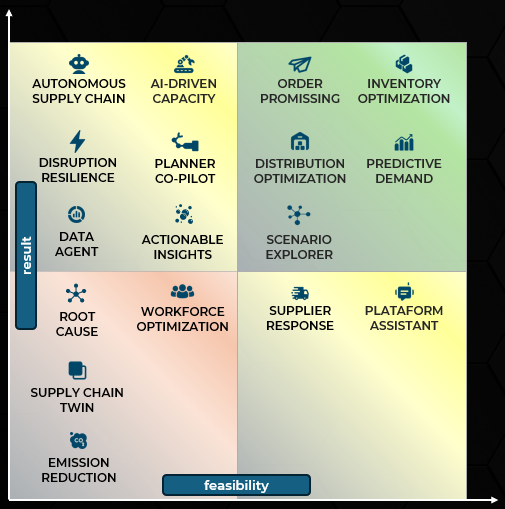
Matriz de priorização NPLAN: Resultado vs Viabilidade
Use Cases Detalhados
Predictive Demandalto impacto
Modelos que combinam histórico, sazonalidade e variáveis externas para prever volumes com precisão e reduzir rupturas.
Inventory Optimizationrápido payback
Algoritmos ajustam políticas de estoque e safety stock de forma dinâmica, equilibrando custo e nível de serviço.
Order Promising
Promessa de entrega baseada em ATP/CTP real, integrando capacidade de produção e disponibilidade de materiais.
Distribution Optimization
Decide automaticamente entre CDs/rotas, reduzindo custo logístico sem sacrificar o OTIF.
AI-Driven Capacity
Rebalanceia máquinas, turnos e setups de acordo com variação de demanda e restrições fabris.
Planner Co-Pilot
Assistente que sugere cenários, destaca riscos e recomenda ações com base em dados e heurísticas de negócio.
Scenario Explorer
Simulação 'what-if' de eventos (preço, lead time, paradas), quantificando impacto operacional e financeiro.
Platform Assistant
Camada unificadora de dados e fluxos de trabalho para decisões colaborativas e auditáveis.
Actionable Insights
Detecta padrões e anomalias e transforma em alertas priorizados por valor de negócio.
Root Cause
Analisa causas de desvios (demanda, produção, logística) e recomenda contramedidas.
Workforce Optimization
Dimensiona e aloca times em operações críticas, reduzindo horas extras e ociosidade.
Supplier Response
Respostas inteligentes a restrições do fornecedor, priorizando itens críticos e replanejando compras.
Disruption Resilience
Mitiga eventos de risco (ruptura, atraso, clima) com planos alternativos e estoques de contingência.
Supply Chain Twin
Espelha processos e restrições em um gêmeo digital para testar mudanças antes de executar.
Data Agent
Orquestração de dados e qualidade contínua: integra, valida e versiona entradas críticas ao planejamento.
Emission Reduction
Otimiza cadeias para menor pegada de carbono, considerando custo/serviço/CO₂ na mesma função objetivo.
Como aplicamos na prática
Iniciamos com dois sprints: (1) diagnóstico de dados e restrições, (2) prova de valor com um dos use cases prioritários. A partir daí, expandimos com cenários e KPIs financeiros.
Flexibilidade Tecnológica
O NPLAN foi projetado para ser versátil e compatível com diversas tecnologias para transformação digital e adoção de IA, como Python, Superset, Streamlit, N8N e embedded web apps, permitindo que atue como plataforma central de planejamento e inovação.
Essa compatibilidade possibilita a criação de dashboards inteligentes, fluxos de automação, aplicações de IA e integrações com sistemas legados ou corporativos. Além disso, a plataforma pode ser customizada sob demanda, transformando requisitos específicos do cliente em soluções exclusivas, mantendo robustez, escalabilidade e aderência às melhores práticas de mercado.
Segurança e Compliance
Utilizamos preferencialmente Azure OpenAI, garantindo que os dados sejam processados e armazenados no Brasil e não utilizados para treinar modelos públicos.
Adotamos criptografia em trânsito e repouso, controle de acessos, monitoramento contínuo e testes de segurança realizados por empresa especializada. Essa abordagem assegura confidencialidade, integridade e disponibilidade das informações, atendendo a requisitos regulatórios e de compliance.
Referências e Contexto
Utilizamos leituras públicas de mercado como insumo de contexto — por exemplo, o artigo Supply Chain Top 25: AI Edition.
A priorização e o roteiro apresentados aqui são propriedade intelectual da NPLAN, refinados em projetos reais.