O problema da maioria das operações industriais não é a falta de planejamento. É a distância entre o plano e o que realmente acontece no chão de fábrica.
Ferramentas de S&OP geram consenso. Dashboards mostram tendências. Reuniões alinham expectativas. Mas quando o turno começa, o que manda é a planilha impressa, o feeling do programador ou o último e-mail do comercial.
Este artigo compara duas abordagens: SAP IBP, referência em planejamento agregado e governança, e o NPLAN, construído para transformar planejamento em execução. A comparação é técnica, prática e baseada em diferenças reais de arquitetura.
Comparativo Executivo
Uma visão de quem implanta e mantém: o que o processo de seleção raramente revela.
| Dimensão |  |  |
|---|---|---|
| Implantação e Esforço | ||
Tempo de Implantação | 18 a 24 meses | 3 a 6 meses |
Custo Anual | ||
Time para Manter | 5 a 8 pessoas | 1 ou 2 Key Users |
Consultoria Típica | 2 especialistas | |
Time to Value | 18+ meses | Semanas |
| Arquitetura e Operação | ||
Processo Completo | SAP IBP + APS Externo + Excel | NPLAN com Opcenter |
Dependência de Especialistas | Alta | Média |
Uso de Excel no Processo | Alto | Desnecessário |
| Resultado do Planejamento | ||
Governança | ||
Simulação de Cenários | ||
Plano Executável | ||
Faixas de custo e prazo do SAP IBP baseadas em referências públicas de mercado. Valores reais variam conforme escopo, número de plantas e nível de customização.
Empresas que já operam o NPLAN integrado ao ERP SAP, combinando a robustez transacional do SAP com o planejamento tático-operacional do NPLAN:




Comparativo Geral
Visão consolidada das diferenças funcionais e arquiteturais. Cada linha combina descrição técnica e intensidade observada em projetos reais.
| Aspecto | | |
|---|---|---|
| Foco principal | S&OP e planejamento agregado | Planejamento tático-operacional integrado |
| Nível de planejamento | Estratégico e tático | Tático e operacional |
| Capacidade finita | Por buckets (agregada) | Nativa, com restrições reais |
| Sequenciamento | Não contemplado (requer APS externo) | Integrado via Opcenter AS |
| Multi-level BOM | Parcial | Explosão completa multinível |
| Cenários | Cópia de versão de plano (agregada) | Encadeados e ramificados (operacional) |
| Integração com execução | Indireta, via ERP + APS | Direta: o plano vira ordem |
| Dependência de múltiplos sistemas | Alta (IBP + APS + ERP + Excel) | Baixa (NPLAN + Opcenter) |
| Dependência de Excel no processo | Alta (add-in nativo no fluxo diário) | Baixa ou inexistente |
| Reprodutibilidade do plano | Parcial (depende de ajustes manuais) | Alta (mesmo input, mesmo plano) |
| Fechamento do ciclo de planejamento | Parcial (reconciliação fora do sistema) | Direto (plano → ordem → execução) |
| Governança executiva de S&OP | Estruturada e madura | Suportada, foco operacional |
| Integração financeira | Nativa com S/4HANA | Via integração com ERP |
| Shelf life e restrições industriais | Parcial | Nativa |
| Time to Value | 18+ meses | Semanas a poucos meses |
O IBP lidera em governança executiva e integração financeira nativa. O NPLAN lidera em capacidade finita, sequenciamento, fechamento do ciclo e velocidade de implantação.
O Que o SAP IBP Faz Bem
O SAP IBP é uma ferramenta robusta, especialmente em cenários onde o objetivo central é governança de S&OP e alinhamento entre áreas. Vale reconhecer onde ele entrega valor antes de discutir limitações.
Governança de S&OP: Estrutura rígida para ciclos de consenso entre demanda, supply, finanças e liderança. Quando o foco é disciplina de processo, o IBP entrega.
Integração com finanças: A conexão nativa com SAP S/4HANA permite traduzir planos operacionais em impacto financeiro, algo que poucas ferramentas fazem nativamente.
Ecossistema SAP: Para empresas que já operam dentro do ecossistema SAP, o IBP oferece continuidade e menor esforço de integração com módulos existentes.
Planejamento agregado estruturado: Famílias de produto, horizontes longos e visões consolidadas são o terreno natural do IBP.
MEIO (Multi-Echelon Inventory Optimization): Otimização de estoques em múltiplos níveis da cadeia, fábricas, CDs e pontos finais. Avalia impacto sistêmico e não apenas cálculo isolado por item.
Dois motores de supply: Heurística rápida baseada em regras e otimização matemática para distribuição entre plantas e fornecimento alternativo.
Control Tower e SAP Analytics Cloud: KPIs configuráveis, alertas por threshold e dashboards executivos com storytelling analítico.
Como o IBP Funciona na Prática
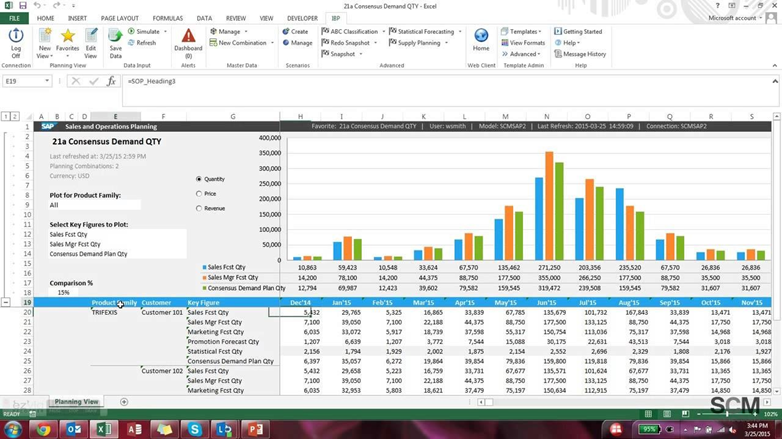
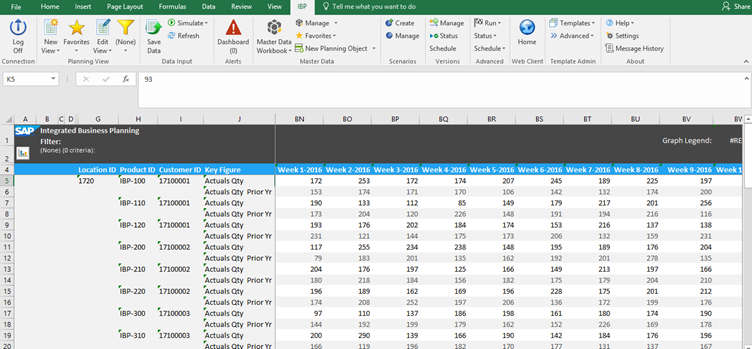
Na teoria, o IBP é uma plataforma cloud de planejamento integrado. Na prática, a operação diária depende fortemente do Excel.
O SAP IBP utiliza um add-in nativo para Excel, e esse não é um recurso secundário, é o principal ponto de interação para muitos usuários. Planejadores exportam dados, ajustam volumes em planilhas, validam restrições manualmente e fazem o upload de volta ao sistema.
Esse fluxo funciona para planejamento agregado. Mas quando a granularidade aumenta, SKU, turno, máquina, o modelo começa a mostrar limitações práticas.
"O problema não é o Excel. É quando o plano só fecha fora do sistema."
Quando ajustes críticos acontecem fora da ferramenta, o plano oficial perde relevância. A operação segue uma versão paralela, e o sistema vira registro, não motor de decisão.
Onde Começam as Limitações
O SAP IBP foi projetado para planejamento agregado. Quando a demanda é descer ao nível operacional, a ferramenta precisa de apoio externo.
Capacidade finita simplificada
O IBP trabalha com buckets de capacidade, não com restrições reais de máquina, setup, turnos e calendário. Isso funciona para visão agregada, mas não gera um plano executável.
Sem sequenciamento
Sequenciar produção exige lógica de setup, prioridade, agrupamento e restrições de máquina. O IBP não contempla esse nível. Para isso, é necessário um APS separado.
Desconexão entre planejamento e execução
O plano gerado no IBP não se transforma diretamente em ordens. É necessário reprocessar no ERP, ajustar no APS, reconciliar entre sistemas, e frequentemente no Excel.
BOM multinível limitado
A explosão de estrutura de produto no IBP é simplificada. Operações com múltiplos níveis de semiacabados e matérias-primas precisam de tratamento adicional.
Arquitetura Real
A diferença fundamental não está em funcionalidades isoladas. Está na arquitetura do fluxo de planejamento.
SAP IBP — Fluxo Típico
5 sistemas. Múltiplas reconciliações. Latência entre decisão e ação.
O NPLAN — Fluxo Integrado
1 sistema. Fluxo contínuo. O plano vira ordem.
Migração SAP APO → IBP
Boa parte das empresas que hoje avaliam SAP IBP chega a essa discussão por um motivo específico: ainda opera com SAP APO e sente a pressão natural do fim de ciclo de vida do produto. A pergunta inicial costuma ser apenas "quando migrar", como se fosse uma evolução natural dentro da mesma família.
Na prática, a migração de APO para IBP não se comporta como um upgrade. Não é uma substituição direta entre módulos equivalentes. Funcionalidades importantes do APO, como o PP/DS para sequenciamento detalhado e parte da lógica de SNP para planejamento de suprimentos restrito, não têm equivalente nativo dentro do IBP no mesmo nível de profundidade. Parte do que hoje roda dentro do APO precisa ser recomposta em outras ferramentas, sejam elas o próprio S/4HANA, soluções de APS externas ou customizações específicas.
O esforço, portanto, vai além de migrar dados e refazer telas. Envolve revisar o modelo de planejamento, redesenhar integrações com o ERP, redistribuir responsabilidades entre sistemas e, em muitos casos, repensar como o sequenciamento e a capacidade finita serão tratados fora do IBP. É um projeto de transformação de arquitetura, não uma atualização técnica.
E é exatamente esse ponto que muda a natureza da decisão. Se a empresa já vai mobilizar tempo, orçamento e equipe para revisar processos, dados e integrações, faz sentido aproveitar o momento para reavaliar a arquitetura de planejamento como um todo, e não apenas reproduzir, dentro do IBP, o que existia no APO.
SAP IBP continua sendo um caminho válido dentro do ecossistema SAP, especialmente para empresas com forte demanda por governança de S&OP, integração financeira nativa e padronização global. Mas não é a única opção. Para operações com necessidade mais forte de planejamento tático-operacional, capacidade finita real, sequenciamento detalhado e ciclo curto entre plano e execução, vale considerar arquiteturas alternativas que conversem com o SAP, sem precisar reproduzir todo o stack dentro dele.
Quando a empresa precisa, de qualquer forma, revisar arquitetura, processos e integrações, a discussão deixa de ser puramente técnica. Passa a ser estratégica: qual abordagem de planejamento faz mais sentido para os próximos anos, em especial quando o objetivo declarado é aproximar planejamento e execução.
Tipo de Decisão Suportada
Uma forma direta de comparar ferramentas é perguntar: que tipo de decisão cada uma consegue responder de forma nativa, sem ajustes externos?
A distinção crítica está entre planejamento agregado (família, mês, planta) e planejamento operacional (SKU, semana/dia, máquina, sequência). São perguntas diferentes, com requisitos diferentes de granularidade e restrição.
| Decisão | | |
|---|---|---|
| Qual o volume agregado por família? | ||
| Qual o mix ideal por SKU considerando capacidade e restrições? | ||
| Qual a sequência ótima de produção considerando setup e prioridade? | ||
| Quando liberar cada ordem dentro do horizonte operacional? | ||
| Qual o impacto de hora extra considerando capacidade finita? | ||
| Como redistribuir produção entre plantas respeitando restrições locais? | ||
| Qual o nível ótimo de estoque por item considerando variabilidade real? | ||
| Como priorizar pedidos quando há restrição de capacidade ou material? | ||
| O plano é executável sem ajustes manuais externos? | ||
| Consigo recalcular o plano completo após mudanças, mantendo consistência? |
O SAP IBP responde "quanto" no nível agregado. O NPLAN responde "quanto", "quando", "onde" e "em que sequência" no nível operacional, com restrições reais.
Cenários e Simulação
O SAP IBP permite criar versões de plano. Na prática, isso significa copiar um baseline, alterar premissas e comparar resultados em nível agregado. É útil para análise de S&OP e discussão executiva.
O NPLAN trabalha com cenários encadeados e ramificados em nível operacional. Em vez de copiar tudo e ajustar manualmente, o planejador simula variações diretamente sobre o plano vigente, com restrições reais de capacidade, setup, BOM e estoque.
Exemplos de simulação operacional no NPLAN:
• O que acontece se eu adicionar hora extra na linha 2 nas próximas 3 semanas?
• Se terceirizar 30% do volume do produto X, como fica o restante do plano?
• Se a demanda do cliente Y subir 20%, consigo atender sem comprometer outros pedidos?
• Se a máquina principal parar por 5 dias, qual o impacto real no atendimento?
A diferença não é apenas de interface, é de granularidade. Simulação agregada compara totais por família ou planta. Simulação operacional devolve um plano viável, pronto para virar ordem.
Custo Invisível
Licença é custo visível. O custo real de uma ferramenta de planejamento aparece em outro lugar.
Dependência de especialistas
IBP exige consultores certificados para configuração, ajustes e evolução. Cada mudança de escopo pode significar novo projeto de consultoria.
Retrabalho entre sistemas
Quando o plano passa por IBP, Excel, ERP e APS, cada transição gera ajustes manuais. Retrabalho consome tempo e introduz erros.
Reconciliação permanente
Manter múltiplos sistemas sincronizados exige processos de conciliação contínuos. A equipe de planejamento gasta mais tempo integrando do que planejando.
Latência na decisão
Quando a informação precisa transitar entre sistemas para virar decisão, a velocidade de resposta cai. Em operações com variabilidade, isso custa caro.
Qual Abordagem Faz Mais Sentido?
Em vez de uma lista genérica, vale uma análise direta. Marque as afirmações que descrevem a sua operação e veja para que lado o seu contexto pende.
Marque as afirmações que descrevem a realidade da sua operação. Ao final, indicamos qual abordagem tende a fazer mais sentido para o seu contexto.
Perfil SAP IBPPerfil O NPLANSAP IBP é só uma das plataformas globais. Veja o panorama completo
Antes de fechar a comparação só com o IBP, vale ver onde Kinaxis, Blue Yonder, Oracle SCP e o próprio SAP IBP se posicionam no mercado e por que o NPLAN entra como alternativa funcional, mais rápida e mais próxima da operação.
Leia mais em nplan.digital/articles/nplan-vs-global-platforms